ADR Driver track
Module 1 of 7

Classes of dangerous goods

The nine ADR hazard classes and what each one means.

ADR 2025 · 2.1ADR 2025 · 2.2
Exam preparation & CPD only. DGMind does not issue ADR certificates — the legal certificate comes from a DfT/SQA-approved training centre and the SQA exam.
Draft content — pending review by a qualified DGSA

Lessons

Indigo · Lesson

The nine classes

15s 1 · Explosive 2 · Gas 3 · Flammable liquid ADR 2025 · 2.1.1.1

ADR hazard class 1 — Explosive1 · Explosive
ADR hazard class 2 — Gas2 · Gas
ADR hazard class 3 — Flammable3 · Flammable liquid
ADR hazard subclass 4.1 — Flam. solid4.1 · Flammable solid
ADR hazard subclass 4.2 — Flam. solid4.2 · Spontaneously combustible
ADR hazard subclass 4.3 — Flam. solid4.3 · Dangerous when wet
ADR hazard subclass 5.1 — Oxidiser5.1 · Oxidiser
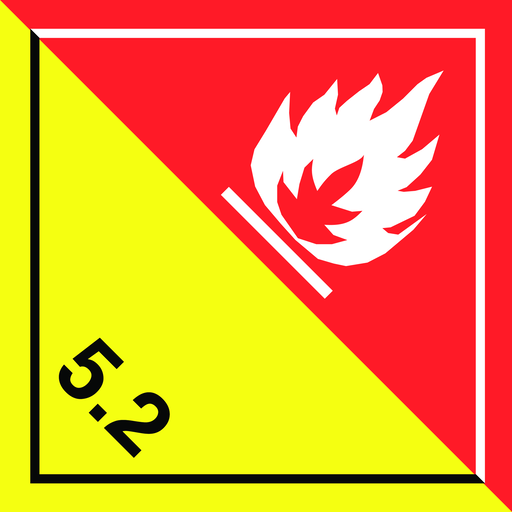
ADR hazard subclass 5.2 — Oxidiser5.2 · Organic peroxide
66 · Toxic / infectious
77 · Radioactive

ADR hazard class 8 — Corrosive8 · Corrosive
99 · Miscellaneous

Classes 6.1, 7 and 9 use illustrative placeholders until official artwork is supplied.

In the cab

It's Monday morning. Tom rolls up to the depot. The first pallet has UN1203 petrol; the next has UN1830 sulphuric acid; the third is UN3480 lithium-ion batteries. Same vehicle. Same trip. Before he even moves, he needs to know what each one IS.

Every dangerous good is sorted into one of nine classes by its main danger. Class 1 is explosives, 2 is gases, 3 is flammable liquids, 4 is flammable solids and similar, 5 is oxidisers and organic peroxides, 6 is toxic and infectious, 7 is radioactive, 8 is corrosives, and 9 is everything else dangerous that doesn't fit the others. Knowing the class tells you the basic hazard at a glance.

Class 1 Explosives · Class 2 Gases · Class 3 Flammable liquids
Key points
  • Class 4 Flammable solids (4.1/4.2/4.3) · Class 5 Oxidisers & organic peroxides (5.1/5.2)
  • Class 6 Toxic & infectious (6.1/6.2) · Class 7 Radioactive · Class 8 Corrosive · Class 9 Miscellaneous
  • The class is the MAIN danger; an item can also have subsidiary dangers.
ADR Citation
ADR 2025 · 2.1.1.1
Dangerous goods are assigned to one of nine classes according to the danger they present. The class structure (1 through 9, with sub-divisions such as 4.1/4.2/4.3) is set out in ADR Part 2.
Draft content, pending DGSA review. Verify against the cited clause before relying on it.
Indigo · Lesson

UN numbers and the proper shipping name

15s UN1203 petrol — Class 3 ADR 2025 · 3.1.2 / 3.2.1
ADR hazard class 3 — FlammableUN1203 petrol — Class 3

Every dangerous good also has a four-digit UN number (for example UN1203 is petrol/motor spirit) and an official name called the proper shipping name. The UN number is the key that links the goods to all the rules — its class, packing group, labels, quantity limits and tunnel code. If you know the UN number you can look everything else up in the Dangerous Goods List (ADR Table A).

UN number = a unique 4-digit ID for the substance or article.
Key points
  • Proper shipping name = the official name used on documents and packages.
  • UN1203 = petrol / motor spirit, Class 3 (flammable liquid) — a common example.
  • Look the UN number up in ADR 3.2 Table A to find class, PG, labels, LQ/EQ and tunnel code.
ADR Citation
ADR 2025 · 3.1.2 / 3.2.1
The proper shipping name and UN number identify the goods; ADR 3.2 Table A (the Dangerous Goods List) gives the class, packing group, labels, quantity provisions and tunnel restriction code for each UN entry.
Draft content, pending DGSA review. Verify against the cited clause before relying on it.
Indigo · Lesson

Packing groups (how dangerous)

15s ADR 2025 · 2.1.1.3

For many classes the goods are also given a packing group, which says how dangerous they are within that class. PG I is high danger, PG II is medium, PG III is low. The packing group affects packaging strength and some quantity limits. Not every class uses packing groups (for example gases and explosives do not).

PG I = high danger · PG II = medium · PG III = low.
Key points
  • Affects packaging standard and some exemption limits.
  • Classes 1, 2, 5.2, 6.2 and 7 do not use packing groups.
ADR Citation
ADR 2025 · 2.1.1.3
Substances may be assigned to packing group I, II or III according to the degree of danger they present (high, medium, low respectively).
Draft content, pending DGSA review. Verify against the cited clause before relying on it.
Indigo · Lesson

Edge cases — when a product has more than one danger

20s UN1230 methanol — primary 3 + subsidiary 6.1 (toxic) UN2014 H₂O₂ — primary 5.1 ADR 2025 · 2.1.3 / 5.2.2.1.6
ADR hazard class 3 — FlammableUN1230 methanol — primary 3
6+ subsidiary 6.1 (toxic)
ADR hazard subclass 5.1 — OxidiserUN2014 H₂O₂ — primary 5.1
ADR hazard class 8 — Corrosive+ subsidiary 8 (corrosive)

Classes 6.1, 7 and 9 use illustrative placeholders until official artwork is supplied.

Many real-world products are not 'just one thing'. A flammable liquid like methanol (UN1230) is also toxic, so it gets a Class 3 primary label AND a Class 6.1 subsidiary label. Hydrogen peroxide solution (UN2014) is an oxidiser AND corrosive: Class 5.1 primary + Class 8 subsidiary. As a driver you don't pick the class — the consignor does — but you must recognise the EXTRA labels and respect them when parking, segregating and acting in an incident. If a load has a subsidiary toxic label, treat it as TOXIC too, not just flammable.

Primary class = the main hazard; subsidiary labels add the others.
Key points
  • UN1230 methanol = Class 3 + 6.1 subsidiary (flammable AND toxic).
  • UN2014 hydrogen peroxide solution = Class 5.1 + 8 subsidiary.
  • Respect EVERY label — don't focus only on the primary class.
ADR Citation
ADR 2025 · 2.1.3 / 5.2.2.1.6
Where a substance has subsidiary hazards, the corresponding subsidiary risk label(s) must also be applied; the primary label shows the class number, subsidiary labels do not.
Draft content, pending DGSA review. Verify against the cited clause before relying on it.
Indigo · Lesson

Common driver classification mistakes

20s ADR 2025 · 4.1.1.11 / 2.2.9.1.7

Drivers don't classify — but you DO check what's been put on the vehicle. Three traps to spot: (1) The paperwork says 'Class 3' but the package has TWO diamonds — that subsidiary danger must be respected too. (2) An empty uncleaned drum is NOT 'empty' under ADR; until properly cleaned it carries the goods' rules ('UN1090 ACETONE, EMPTY UNCLEANED'). (3) Lithium batteries (UN3480/UN3090) are Class 9 but with the 9A label and special rules — not just 'ordinary' Class 9. If something doesn't match the paperwork, stop and ask before driving.

Empty uncleaned packaging keeps the goods' rules until decontaminated.
Key points
  • Two diamonds = two hazards — both apply, even on a 'Class 3' load.
  • Lithium batteries carry the 9A label, not a plain Class 9 diamond.
  • Paperwork mismatch with the package? Don't drive — ask the office.
ADR Citation
ADR 2025 · 4.1.1.11 / 2.2.9.1.7
Empty uncleaned packagings retain the carriage requirements of the dangerous goods they contained; lithium batteries fall under specific class 9 entries (UN3090/3091/3480/3481) with class 9A label and special provisions.
Draft content, pending DGSA review. Verify against the cited clause before relying on it.

Practice questions

0 / 11 answered
  1. 1
    Which ADR class covers flammable liquids?
  2. 2
    What does a UN number identify?
  3. 3
    Packing group I means the goods present:
  4. 4
    Which class is for corrosive substances?
  5. 5
    Class 9 dangerous goods are best described as:
  6. 6
    UN1203 is which substance and class?
  7. 7
    A drum on your vehicle has a Class 3 flame label AND a smaller Class 6.1 skull-and-crossbones label. The 6.1 label has no number. What does this mean?
  8. 8
    The depot manager asks you to return an 'empty' drum that contained UN1203 petrol. It has not been cleaned. ADR treats this drum as:
  9. 9
    A consignment of UN3480 lithium-ion batteries is loaded. Which class label do you expect on the package?
  10. 10
    The paperwork describes the load as 'UN1830 SULPHURIC ACID, 8, II, (E)'. Without looking anything else up, what is the primary hazard you must be alert to?
  11. 11
    Why does it matter to you, the driver, that some classes (like 1, 2, 5.2, 6.2 and 7) do NOT use packing groups?
Practice quiz — pick an answer to see whether it's right and why.