DGSA track
Module 2 of 7

Classification & the Dangerous Goods List

Assigning class, packing group and UN number, and reading ADR Table A — the DGSA's core technical skill.

ADR 2025 · 2.1ADR 2025 · 2.2ADR 2025 · 3.2
Exam preparation & CPD only. DGMind does not examine or certify DGSAs — the legal certificate is issued by the SQA after you pass its exams.
Draft content — pending review by a qualified DGSA

Lessons

Violet · Lesson

Class, packing group and UN number

20s 1 · Explosive 2 · Gas 3 · Flammable liquid ADR 2025 · 2.1.1 / 2.1.3

ADR hazard class 1 — Explosive1 · Explosive
ADR hazard class 2 — Gas2 · Gas
ADR hazard class 3 — Flammable3 · Flammable liquid
ADR hazard subclass 4.1 — Flam. solid4.1 · Flammable solid
ADR hazard subclass 4.2 — Flam. solid4.2 · Spontaneously combustible
ADR hazard subclass 4.3 — Flam. solid4.3 · Dangerous when wet
ADR hazard subclass 5.1 — Oxidiser5.1 · Oxidiser
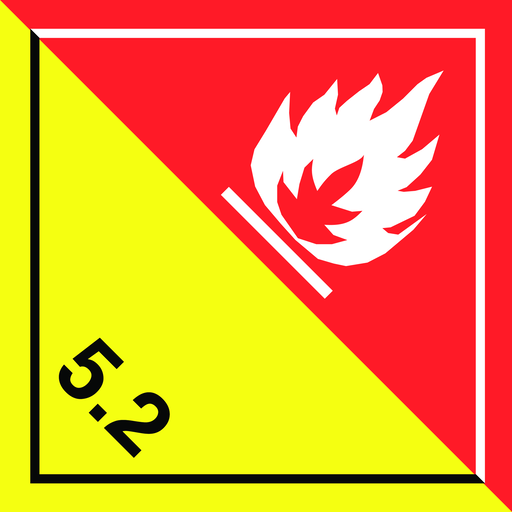
ADR hazard subclass 5.2 — Oxidiser5.2 · Organic peroxide
66 · Toxic / infectious
77 · Radioactive

ADR hazard class 8 — Corrosive8 · Corrosive
99 · Miscellaneous

Classes 6.1, 7 and 9 use illustrative placeholders until official artwork is supplied.

Correct classification underpins everything else — get it wrong and the packaging, labels, documents and segregation all follow the wrong rule. The DGSA must be able to assign (or check) the class (1–9, with sub-divisions), the packing group (I/II/III where used), and the UN number and proper shipping name. For a mixture or a substance not named specifically, you work to the relevant 'N.O.S.' entry and apply the classification criteria in Part 2.

Nine classes; sub-divisions like 4.1/4.2/4.3, 5.1/5.2, 6.1/6.2.
Key points
  • Packing groups I (high) / II (medium) / III (low) — not used for classes 1, 2, 5.2, 6.2, 7.
  • Substances not listed by name use a generic / N.O.S. entry with the correct technical name.
  • Classification drives packaging, marking, documents and segregation — verify it first.
ADR Citation
ADR 2025 · 2.1.1 / 2.1.3
Part 2 sets the classification principles: assignment to a class, determination of packing group, and (for unlisted substances) assignment to an appropriate collective or N.O.S. entry.
Draft content, pending DGSA review. Verify against the cited clause before relying on it.
Violet · Lesson

Reading Table A (the Dangerous Goods List)

20s ADR 2025 · 3.2.1

ADR 3.2 Table A is the master lookup. Each UN entry is a row; the columns give the class, classification code, packing group, labels, special provisions, limited/excepted quantity allowances, packing instructions, tank codes and the tunnel restriction code. In the open-book exam the skill being tested is finding the right row and reading across the columns correctly — exactly what DGMind's UN lookup does, but the candidate must be able to do it from the book.

One row per UN entry; read ACROSS the columns for the full rule set.
Key points
  • Column highlights: class (3a), labels (5), special provisions (6), LQ (7a), EQ (7b), tunnel code (15).
  • Special provisions in column 6 can change or add requirements — always check them.
  • DGMind's lookup mirrors Table A, but the exam is done from the printed ADR.
ADR Citation
ADR 2025 · 3.2.1
Table A lists dangerous goods by UN number with their class, classification code, packing group, labels, special provisions, limited/excepted quantity provisions, packing/tank instructions and tunnel restriction code in numbered columns.
Draft content, pending DGSA review. Verify against the cited clause before relying on it.
Violet · Lesson

Mixtures and N.O.S. entries — picking the right one

25s ADR 2025 · 2.1.3 / 2.1.3.10 / 3.1.2.8

Many real shipments are mixtures of substances, not a single named chemical. ADR has a layered rule: prefer the most specific entry that matches the predominant hazard. If a substance has more than one hazard, the precedence table (2.1.3.10) decides which class is primary; the others become subsidiary risks. If no specific name fits, use the generic / N.O.S. entry that matches the class and hazard (e.g. UN1993 'FLAMMABLE LIQUID, N.O.S.'), and on the transport document add the technical name(s) of the dominant constituents in brackets (3.1.2.8). Never pick an N.O.S. entry just because it's easier — specificity matters.

Prefer the most SPECIFIC entry that matches the goods (2.1.3).
Key points
  • Multi-hazard → use the precedence table to pick the primary class (2.1.3.10).
  • Generic / N.O.S. when no specific name fits — add technical name(s) per 3.1.2.8.
  • Wrong N.O.S. choice = wrong packing, labels, segregation and document — common audit failing.
ADR Citation
ADR 2025 · 2.1.3 / 2.1.3.10 / 3.1.2.8
Unlisted substances and mixtures are classified using the criteria of Part 2, the precedence-of-hazard table (2.1.3.10) where multiple hazards apply, and assigned to a specific or generic / N.O.S. entry; technical names accompany N.O.S. entries (3.1.2.8).
Draft content, pending DGSA review. Verify against the cited clause before relying on it.
Violet · Lesson

Class 3 classification criteria (flammable liquids)

20s Class 3 — flammable liquid ADR 2025 · 2.2.3.1
ADR hazard class 3 — FlammableClass 3 — flammable liquid

For Class 3 the packing group is decided from flash point and initial boiling point, with specific cut-offs in 2.2.3.1. Packing group I covers liquids with very low flash point and low boiling point (most hazardous); II covers flash point < 23 °C with higher boiling point; III covers flash point 23–60 °C. Substances with flash point above 60 °C are not normally Class 3. The DGSA reviews the SDS values, applies the 2.2.3 criteria and verifies the assigned UN entry — wrong PG means wrong packaging and wrong threshold multiplier (1.1.3.6).

PG decided from flash point + initial boiling point (2.2.3.1).
Key points
  • PG I: low FP + low BP; PG II: FP < 23 °C + higher BP; PG III: FP 23–60 °C.
  • FP > 60 °C is usually NOT Class 3 (other rules may apply).
  • Wrong PG → wrong packaging mark, wrong 1.1.3.6 multiplier and wrong tunnel category in many cases.
ADR Citation
ADR 2025 · 2.2.3.1
Class 3 packing groups are assigned from flash point and initial boiling point per the criteria in 2.2.3.1.
Draft content, pending DGSA review. Verify against the cited clause before relying on it.
Violet · Lesson

Class 8 classification criteria (corrosives)

20s Class 8 — corrosive (split black/white) ADR 2025 · 2.2.8.1.4
ADR hazard class 8 — CorrosiveClass 8 — corrosive (split black/white)

Class 8 corrosives are assigned to PG I, II or III based on how quickly they cause irreversible damage to skin (or, where data exist, to metals). The 2.2.8.1.4 criteria use observation times (≤ 3 minutes, ≤ 60 minutes, ≤ 4 hours) for full-thickness destruction of intact skin. The DGSA checks the SDS supports the assigned PG; weak generic 'corrosive' descriptions without supporting data are a red flag. As with Class 3, wrong PG cascades into wrong packaging, threshold and sometimes wrong UN entry.

PG I: full-thickness skin destruction in ≤ 3 minutes.
Key points
  • PG II: full-thickness skin destruction in > 3 min but ≤ 60 min.
  • PG III: full-thickness skin destruction in > 60 min but ≤ 4 hours.
  • Where animal-test data are absent, use the GHS / 2.2.8 alternative methods — verify the source.
ADR Citation
ADR 2025 · 2.2.8.1.4
Class 8 PG assignment is based on exposure times producing full-thickness destruction of intact skin (2.2.8.1.4).
Draft content, pending DGSA review. Verify against the cited clause before relying on it.

Practice questions (MCQ)

0 / 9 answered
  1. 1
    Why is correct classification the DGSA's first technical check?
  2. 2
    Which classes do NOT use packing groups?
  3. 3
    Where do you find the tunnel restriction code for a UN entry?
  4. 4
    A substance is not listed by name in Table A. You should:
  5. 5
    Column 6 of Table A contains:
  6. 6
    A mixture has both flammable-liquid and corrosive properties. Which clause decides which class is primary?
  7. 7
    Choosing an N.O.S. entry instead of a specific named entry is acceptable when:
  8. 8
    A Class 3 liquid has a flash point of 35 °C and an initial boiling point of 110 °C. What packing group?
  9. 9
    A Class 8 corrosive causes full-thickness destruction of intact skin in 30 minutes. Packing group?
Practice quiz — pick an answer to see whether it's right and why.

Written-answer & case-study practice

The real DGSA exam is open-book short-answer plus a case study. These are self-study — draft your answer, then reveal the model answer to compare. Not auto-graded.

1
Short-answerSelf-study — model answer, not auto-graded

A consignor presents drums described only as 'cleaning fluid, flammable'. The DGSA is asked to confirm classification before despatch.

Your tasks
  1. Explain how you would classify the goods.
  2. State which Table A columns you would read once a UN number is identified.
  3. Note one risk of accepting the consignor's description at face value.
2
Case studySelf-study — model answer, not auto-graded

CLASSIFICATION CASE STUDY. A consignor presents a four-product despatch: (a) a paint with flash point 18 °C and BP 90 °C; (b) a battery-acid solution with concentration 35 % H₂SO₄; (c) a mixture described as 'cleaner — corrosive AND flammable, no UN'; and (d) a substance flagged on the SDS as 'environmentally hazardous' but with no other ADR hazard. The DGSA is asked to classify the four before despatch.

Your tasks
  1. Assign class, packing group and a plausible UN entry to each, with reasoning.
  2. Explain which clause governs the multi-hazard item.
  3. Identify the most common audit failing in this set.